
The Night Before Surgery: Meeting the Dragons in My Wrist

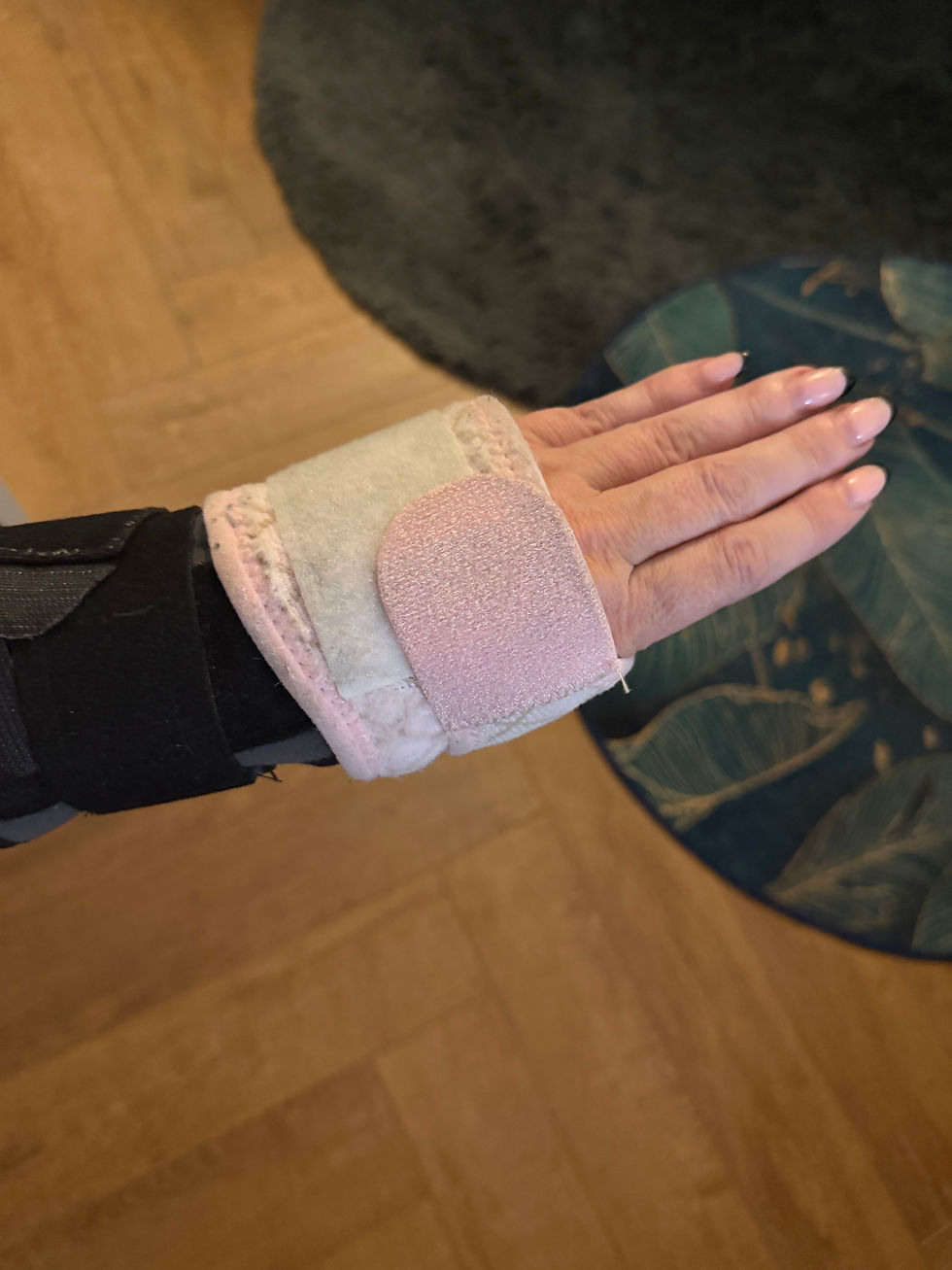
Tomorrow, I’m having surgery on my wrist.
It is strange to write that sentence. For a long time, the pain was simply part of the background: something I worked around, adjusted for, and explained away. Then I fell down the stairs while packing. My wrist and knee were injured, and the pain became harder to ignore.
At the specialist’s appointment, he looked at the X-rays and asked whether I had really been in pain for only two months. He could see that this had been going on for years.
I started crying.
Not because he had fixed anything in that moment, but because he had seen what I had been carrying. I had SLAC wrist, stage 2. The likely story is that I tore a ligament when I broke my wrist in my twenties. The injury may have been missed, and over time the joint developed arthritis. Now the plan is a proximal row carpectomy, or PRC: the surgeon will remove three small bones in the wrist to reduce the painful contact inside the joint.
I have been told to expect a hard recovery. It may take three months to a year. The movement in my wrist will be reduced, especially bending it forward and back. Yoga may become difficult in ways I am still trying to picture. The hope is that the pain I feel at rest, which can be around a six, will eventually settle closer to a two.
Tonight, I am not pretending to know exactly how I feel. I can be relieved that there is a plan and frightened of what comes next. I can trust my surgeon and still wish I did not need surgery. I can want the pain to ease and grieve the movement I may lose.
Several dragons are awake.
The dragon that asks, “What if it hurts?”
This one is trying to protect me from pain. It remembers that pain has been here for a long time, and it wants to know what tomorrow and recovery will bring. Its questions can multiply quickly: How bad will it be? What if recovery is harder than expected? What if I cannot sleep or manage ordinary things?
I calm this dragon by giving it what it needs most: honesty and a smaller horizon.
I do not need to solve a year of recovery tonight. Tomorrow, I need to get through tomorrow. After that, I can take the next step with my care team. I can follow the guidance I am given, ask questions when I need to, and let the plan meet the reality of my recovery.
The dragon does not need a promise that nothing will hurt. It needs to know that I will pay attention and respond.
The dragon that guards my independence
I am used to being capable. I care deeply about autonomy, and there is comfort in being the person who can make a plan, carry things, and keep moving.
I am also the person who makes Thanksgiving dinner. I cook everything homemade, from scratch, drawing on the traditions and flavors of my childhood. It is one evening a year that I pour a great deal of love, time, and planning into. Feeding the people I love this way is part of how I welcome them. It is a ritual that belongs to me.
Thanksgiving is on the calendar for November 27, and I cannot yet imagine how I will manage it after surgery. I also do not want help. Both things are true. I do not want someone else to take over the meal or turn it into something that no longer feels like mine. This is not a simple problem I can solve by telling myself to accept support. The meal carries memory, care, pride, and choice. My independence is tangled up with all of that.
This dragon is protecting more than my ability to do things alone. It is guarding my authorship of a tradition that matters to me. And beneath that, there is fear: What if my body cannot do what I want it to do? What if I have to choose between keeping the tradition and protecting my recovery?
There is a conviction underneath that fear that I recognize in my American culture: being sick or weak is a mindset. If I were strong enough, determined enough, I should be able to overcome it. When my body is broken, I do not only feel pain or frustration. I feel guilt. Some part of me believes I should be able to push through, keep cooking, keep caring, keep doing everything I usually do.
But my wrist is not injured because I failed to think positively. It needs surgery because something physical has been wrong for years. The guilt is real, but it is not proof that I am doing recovery badly or that I have failed. It may be the echo of a conviction I have carried for a long time. I can hear it without letting it define what my body is allowed to need.
I do not have an answer tonight. I do not need to force one before I know what recovery will ask of me. For now, I can tell the truth without turning it into a plan: I cannot picture managing Thanksgiving alone this year, and I do not want help. That is where I am. Later, when I know more, I can decide what I want. The choice remains mine.
Calming this dragon does not mean persuading it to welcome help. It means listening to what this meal means to me, making room for the fear and grief, and not demanding that I solve November on the eve of surgery.
The dragon that grieves what may change
I love moving my body. The thought that yoga may be harder brings a particular kind of sadness. I do not yet know exactly what will be possible after recovery, and I do not want to rush past that uncertainty with forced optimism.
This dragon is protecting something precious: the freedom and pleasure I find in movement. I can thank it for caring so much. Then I can remind it that grief and hope are allowed to sit beside each other. I may need to adapt. I may discover new ways to move. I do not have to decide tonight what that future will look like.
I love moving my body. The thought that yoga may be harder brings a particular kind of sadness. I do not yet know exactly what will be possible after recovery, and I do not want to rush past that uncertainty with forced optimism.
This dragon is protecting something precious: the freedom and pleasure I find in movement. I can thank it for caring so much. Then I can remind it that grief and hope are allowed to sit beside each other. I may need to adapt. I may discover new ways to move. I do not have to decide tonight what that future will look like.
The dragon that needs to be believed
There is another dragon here, one that remembers how easy it is to minimize pain when you have lived with it for a long time. The specialist’s words reached somewhere tender: You have been carrying this for years.
Being seen did not make the diagnosis easy. But it changed the story I was telling myself. My pain was not a weakness or a failure to cope. It was information from my body, and it deserved attention.
I can calm this dragon by believing myself, too. I do not need to earn care by proving that I can endure more.
Letting the dragons come with me
In my layered model, behavior is what we can see. Beneath it sit our convictions, then our values, then the rationales we carry. At the core is something precious our dragons are trying to protect.
The behavior tonight might be planning, worrying, crying, joking, or trying to make everything feel manageable. Beneath those reactions may be simple truths: I want to be safe. I want to remain myself. I want to move freely. I want my pain to be taken seriously. I want to be able to choose.
I do not need to silence those truths to be brave.
So tonight, I am calming the dragons by listening to what they protect. I am naming what I know and what I do not know. I am letting trusted people support me. I am bringing my questions into the room with my care team. And I am reminding myself that I only have to meet the next moment when it arrives.
Tomorrow, I will go into surgery with fear, relief, grief, hope, and all the dragons that belong to me.
They are not proof that I am failing to cope. They are here because something precious is at stake.
For now, I can breathe, let the people caring for me do their work, and take this one small step at a time. 💚🐉


Comments