
When a Lens Becomes a Label

A model can help us notice difference. It cannot tell us what another person’s difference means.
A leadership model can teach us to listen more carefully. It can also teach us to sound empathetic while deciding who someone is before they have had the chance to tell us.
That is the line I kept feeling during a one-hour talk I attended earlier this week. My skin was crawling, and at first I couldn’t explain why. I believe culture shapes us. I teach leaders to notice how culture influences what feels normal, respectful, direct, safe, or successful. That awareness can open a room.
But awareness should make us more curious about the person in front of us. It should not make us more certain that we already understand them.
The talk moved quickly from observable behavior to an explanation of the person underneath it. Someone wants to get to the point. Someone tells a story. Someone resists a change. Those behaviors were sorted into styles, and the styles came with assumed needs and fears: control, approval, rejection, being wrong. Then came advice about how to approach each type.
There were good reminders, too: active listening, empathy, ask before assuming. I value those practices very much. But the structure around them matters. If we teach people to classify someone first,
“listen actively”
can become a way to confirm the classification. The leader may ask questions, but already believes they know what the answers mean.
That is not curiosity. It is judgment wearing the language of care.
A behavior is an invitation to ask, not an answer
We can see what someone does. We cannot see the full meaning of it.
A person interrupts. A person goes quiet. A person asks for more evidence, pushes back on a change, tells a long story, or misses a deadline. Those are behaviors. They matter, and they can have real effects on other people. But behavior alone does not tell us the conviction beneath it, the valuesconnected to that conviction, the rationale that gives those values meaning, or what may be precious at the person’s core.
A useful model can help us hold those layers in view:
Behavior → conviction → value → rationale → core
The layers are connected, but they are not interchangeable. We do not get to fill them in for someone else.
Take interrupting. From the outside, it may look like impatience or disregard. A conviction beneath the behavior might be,
“Thinking together means responding as ideas emerge.”
That conviction may be connected to values such as participation, connection, or being understood.The person’s rationale might be,
“If I wait until the other person finishes, I may lose the connection I’m trying to make.”
And closer to the core, something precious may be asking for room. That is one possible account, notsomething we can infer from the interruption itself.
Or there may be a different story entirely. The behavior does not give us permission to choose one.
Or there may be a different story entirely. The behavior does not give us permission to choose one.
The talk hit me so deeply because I have spent much of my life having my behavior explained for me: my interruptions, the moments when I go quiet, even my reasons for helping.
Soon after, in a “Your Brain at Work” session, I shared some of my own experiences. My brain is fast, associative, and sensitive to input. I often listen, connect, and respond in the flow of a conversation. What someone else experiences as an interruption can feel to me like joining that flow. Holding a thought while waiting for the
“right moment”
takes effort, and I do not always know when that moment is.
I sometimes go silent, too. There is no single explanation for every time. Someone can notice the silence; they cannot know what it means without asking. My interruptions, silence, and offers of help all show up as behavior. They do not hand another person the full story.
And my reason for helping? It’s driven by my Reformer rationale, it’s my entire life motivation to make the world a better place, no other drive than that. I’d rather do it from a silent background position than on the stage in front of you.
I am responsible for how my behavior affects others. I also need the space to explain what is happening for me. The behavior is visible. The meaning underneath it is mine to explain.
Culture shapes the stories we inherit
Culture is not just nationality, etiquette, or a preferred communication style. It can reach into our convictions: what a good leader does, what respect requires, who may disagree, what success looks like, what a responsible person should endure.
In my work with leaders, we sometimes explore a value they have always believed was simply “theirs.” They may discover that it came, in part, from family or society. That discovery does not make the valuefalse. It creates space for a more important question: Do I still choose this? Does it help me live and lead in the way I want?
That is different from looking at someone’s behavior and declaring what they value or fear. One process returns authorship to the person. The other takes it away.
Culture can help us notice that two people may attach different meanings to the same action. It cannot tell us, by itself, which meaning belongs to this person, in this moment. Even within one family, team, country, or profession, people inherit different stories and make different choices about what to keep.
When a leader treats a cultural pattern as a prediction about an individual, the pattern stops being a lens. It becomes a script the person is expected to perform.
Start with the work, then ask better questions
During the “Your Brain at Work” session, we gathered work challenges people wanted to understand: losing track of time, estimating how long something will take, getting started on boring work, juggling several ideas, prioritizing, and finishing when something gets blocked.
Those notes did not tell us who anyone was. They gave us somewhere to begin asking.
What is happening when time disappears? What makes this task hard to start? What is competing for attention? What helps you return to the work after it gets blocked? Does this happen every time, or only under certain conditions? What have you already tried?
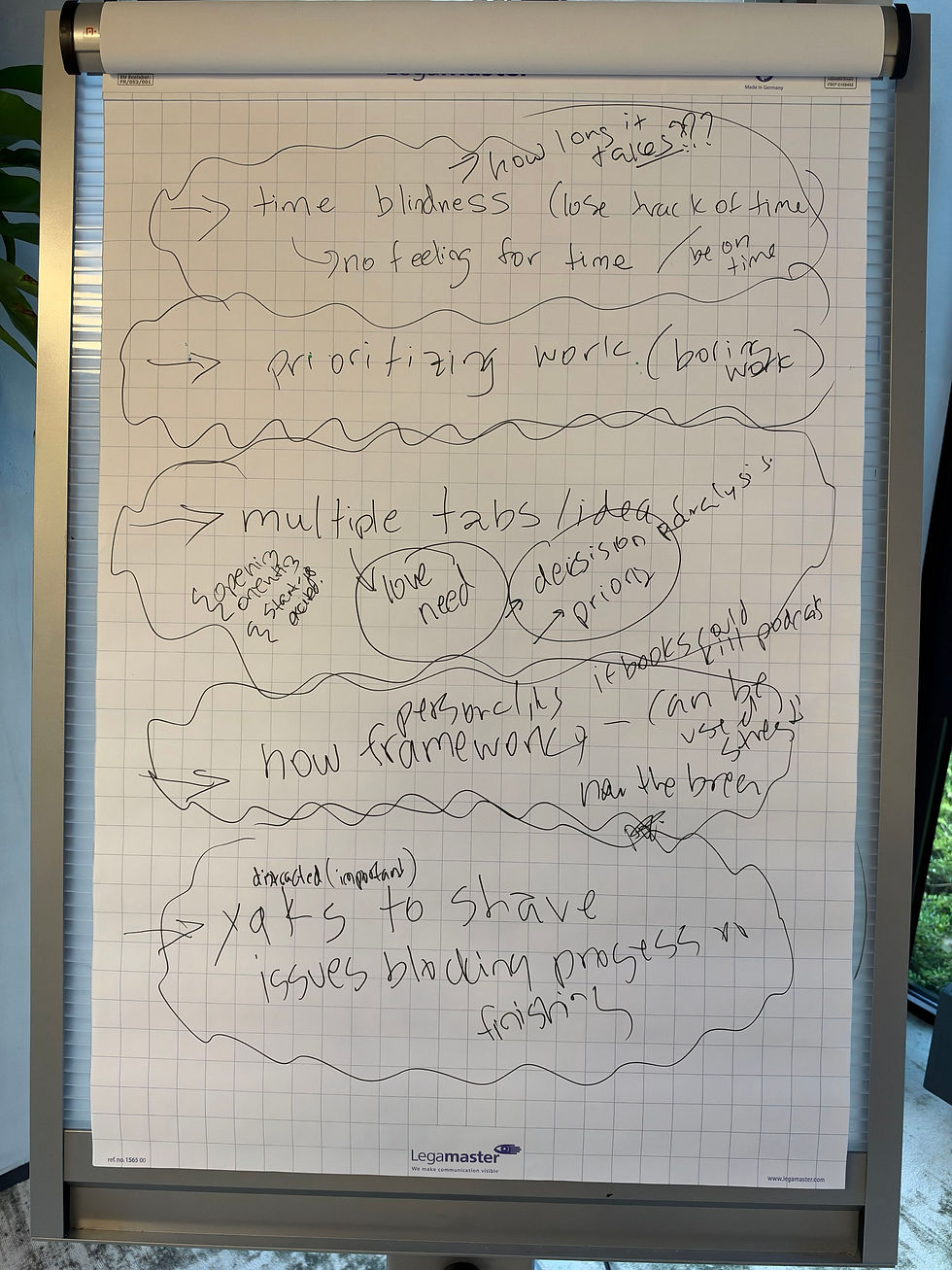
The same behavior can have different meanings for different people. It can mean something different for the same person in another moment, with another task, or under another kind of pressure. We learn by staying with the person’s account, not by mistaking our first explanation for insight.
That is also why, in Leadership Landing, I invite people to revisit a story in which they felt heard, seen, and respected. What values do they notice now? Which feel like theirs, and which may have come from family? What happens when those values clash? How do their values shape their convictions and behavior?
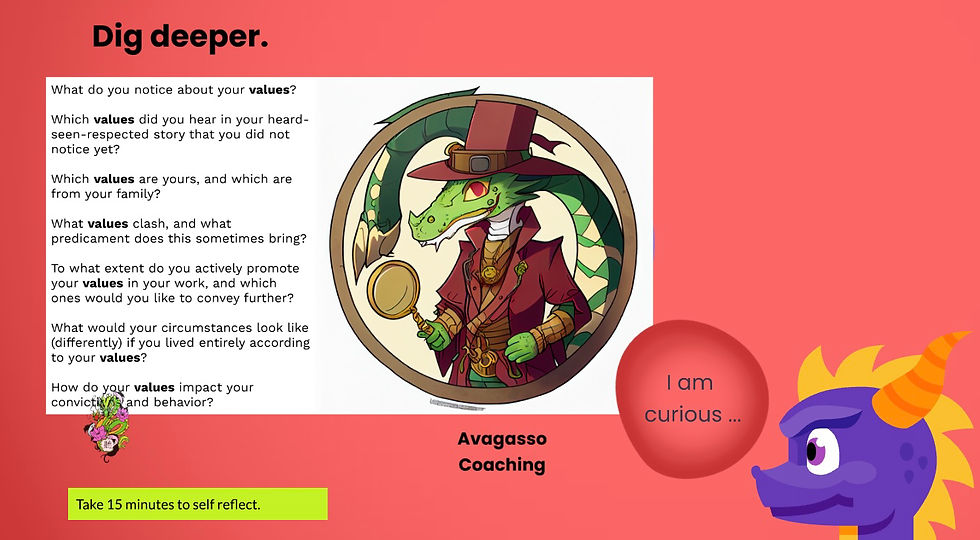
I offer the questions. I do not name the meaning for them.
The hidden cost of getting it wrong
When we label someone as resistant, controlling, careless, or attention-seeking, we may stop looking for the conditions that shape the behavior. We may miss unclear expectations, competing priorities, a need for time to process, a past experience that changed what feels safe, or a strength that the current environment cannot use.
The cost is not only that we might hurt someone’s feelings. We may make poorer decisions. We may design work around a false story, withhold trust, overlook useful knowledge, or ask someone to adapt to a category instead of changing the conditions that keep them from contributing.
That is how inclusion and productive power connect. People contribute more fully when there is room to explain what they need, challenge the story being told about them, and work in a way that lets their strengths matter. A label can close that room before the conversation begins.
A model may offer a starting point. A pattern may help us notice what to ask about. But the moment we use it to decide someone’s hidden fears, values, or motives, we have crossed from observation into authorship. We are writing their story for them.
Somewhere near the core, a dragon may be guarding something precious. We do not get to name that dragon for someone else. We can ask what it is protecting and listen to the answer, even when it surprises us.
The question is not whether we should use models. It is whether we can use them without surrendering our curiosity to them.
When you notice a behavior that surprises or frustrates you, what question could help you leave room for the person’s own meaning?


Comments