
The Most Dangerous Thing AI Can Automate Is Our Certainty

A system can pass every test we gave it and still fail the reality we forgot to question
Everything passed.
The code compiled.
The tests ran.
The result was green.
The AI reviewed its own work and found no problem.
There is something deeply reassuring about a row of green checks.
Green tells us the work is complete. Green tells us the system behaved as expected. Green gives us permission to stop looking, make the next decision, and move on.
But green can only tell us that the result matched an expectation.
It cannot tell us whether the expectation deserved to become reality.
That distinction may sound technical. It is not. It reaches into how we design products, evaluate people, measure performance, lead transformations, interpret risk, and decide whose experience counts as evidence.
Because the most dangerous thing AI can automate is not an error.
It is certainty.
The first misunderstanding can become the whole system
Imagine the real requirement is simple: only customers whose identities have been verified may transfer money.
An AI agent interprets “verified” as “email address verified.” It writes the code from that interpretation. Then it writes tests to confirm that customers with verified email addresses can transfer money. It reviews the result against the same interpretation.
The code passes.
The test passes.
The requirement still fails.
Nothing in the loop is necessarily malfunctioning. Each step may be perfectly coherent with the one before it. That is precisely what makes the loop dangerous.
Consistency is not the same as correctness.
When the same mind, or the same model, interprets the request, creates the solution, defines the evidence, and judges the result, the original assumption can travel through the entire chain untouched. By the end, it no longer looks like an assumption. It looks like proof.
AI makes this possible at extraordinary speed. Yet the pattern itself is not new.
Organizations have always done this.
We define success according to what we already know how to measure. We build a process around that definition. We produce dashboards showing that the process is working. Then we use those dashboards to prove that our original definition of success was right.
The circle closes.
The numbers agree with the system because the system decided which numbers would matter.
Every test contains a worldview
A test looks objective because it produces a binary result: pass or fail.
Yet before any test can run, someone has to decide what should happen, what should never happen, which conditions matter, which risks are acceptable, and what evidence will count.
Those are not merely technical choices. They are interpretations of reality.
And interpretations carry values.
A hiring process can pass every compliance check and still exclude people whose talent does not resemble the profile used to define “potential.”
A transformation can deliver every milestone and still leave the people expected to sustain it without the time, safety, or understanding to do so.
A performance system can be calibrated perfectly and still reward visibility over contribution, confidence over wisdom, or similarity to the people already in power.
A release can meet every documented criterion and still fail customers whose circumstances were never represented in the requirements.
An organization can pass every test it designed and still fail the person it never imagined.
This is why the deeper question is never only, “Did the result pass?”
It is also:
🔥 Who decided what passing means?
🔥 Which need sits underneath the requirement?
🔥 Whose experience informed it?
🔥 Who might carry the consequences if our interpretation is incomplete?
🔥 What truth would remain invisible even if every metric turned green?
We do not make systems neutral by turning human judgment into code. We make human judgment less visible.
Green is not only a status. It is an emotional experience.
Why do intelligent people move on when everything is green?
Not because they are careless.
Because certainty regulates us.
Ambiguity is demanding. It requires attention, energy, and the humility to remain unfinished. A green check closes the loop in our minds. It relieves tension. It reassures the engineer that the work is sound, the manager that progress is real, and the leader that the decision can be defended.
Questioning a green result reopens uncertainty. It may delay delivery. It may reveal that expensive work was built on a fragile assumption. It may ask a respected expert to reconsider their reasoning. It may require a leader to admit that the certainty they communicated was premature.
So beneath the process lives a more human dragon.
It guards competence: What if finding a flaw means I was not good enough?
It guards belonging: What if challenging this makes me difficult?
It guards status: What if admitting uncertainty weakens my authority?
It guards momentum: What if one question slows everything down?
The dragon is not irrational. It has learned that many workplaces reward answers more visibly than questions. They celebrate speed and quietly punish the person who introduces complexity. They say they want critical thinking, then label the critical thinker negative, resistant, unsupportive, or “not ready for AI.”
Under those conditions, false confidence is not an individual defect. It is an organizational adaptation.
People learn which doubts are safe to voice. Eventually, they stop noticing the ones they have trained themselves to suppress.
The deeper risk is epistemic dependence
We often discuss dependence on AI as the loss of a practical skill: people may forget how to write, code, research, or calculate without assistance.
There is another form of dependence that concerns me more.
We may stop experiencing ourselves as responsible for knowing.
The output looks complete. The explanation sounds plausible. The tests agree. The source of authority becomes difficult to locate, so responsibility quietly diffuses across the workflow.
The product owner assumes the engineer checked.
The engineer assumes the agent tested.
The reviewer assumes the evidence is objective.
The leader assumes the process provides assurance.
Everyone participated. No one truly interrupted the thinking.
AI did not remove human judgment from the system. We humans have surrendered it in small, reasonable increments.
This is why “human in the loop” is not enough.
A human can be present and still behave as a ceremonial approver. We can click accept, scan a summary, or admire the completeness of an answer without bringing an independent frame of reference to it.
The question is not whether a human touched the output.
The question is whether a human introduced meaningful difference.
Did anyone return to the underlying purpose?
Did anyone look from the position of the person carrying the risk?
Did anyone try to disprove the conclusion?
Did anyone ask what the system could not see because no one told it to look?
Without difference, the human is not breaking the loop. We are decorating it.
Independent challenge is an act of care
Many organizations interpret challenge through the language of trust.
If I question your logic, perhaps I do not trust your competence. If I ask for another perspective, perhaps I doubt your integrity. If I slow the decision, perhaps I am not committed to the goal.
But mature trust is not the absence of challenge.
It is the confidence that our relationship can survive it.
When the stakes matter, inviting another person to find what we cannot see is not an accusation. It is an acknowledgment of a fundamental limitation: none of us can stand outside our own perspective alone.
I can be capable, careful, ethical, and still wrong.
You can challenge my reasoning and still respect me.
Both can be true.
That is intellectual humility, not performative uncertainty or the refusal to take a position, but the strength to hold a conclusion firmly enough to act and lightly enough to revise.
“Please try to prove me wrong” is one of the most courageous sentences an expert can offer. It separates identity from idea. It says:
My value is not threatened by discovering that my current understanding is incomplete.
And it transforms verification from a ritual of approval into a search for reality.
Power decides whether questions can live
We cannot ask people to challenge thinking without examining what happens to challengers.
Does the person who finds a hidden assumption receive appreciation or acquire a reputation?
When a junior engineer questions an AI-generated solution supported by a senior leader, does curiosity enter the room, or does hierarchy?
When someone raises a risk after momentum has built, are they thanked for protecting the outcome, or blamed for threatening the deadline?
When a team says, “We do not yet understand the requirement,” does leadership hear maturity or lack of progress?
Psychological safety is often described as the freedom to speak. Its deeper test is what the system does after someone speaks.
A leader does not make questioning safe by announcing that all perspectives are welcome. Safety is created in the seconds after the uncomfortable question:
🔥 in the expression on the leader’s face;
🔥 in whether curiosity arrives before defense;
🔥 in whether the schedule is allowed to change;
🔥 in whether the challenger remains included after challenging;
🔥 in whether finding a flawed assumption is treated as value created rather than work delayed.
Culture learns from consequences, not slogans.
If the social cost of questioning is higher than the operational cost of being wrong, silence becomes the rational choice.
AI is revealing what our cultures already valued
AI did not invent our hunger for certainty. It is revealing it.
It did not create our tendency to confuse polished communication with sound reasoning, speed with progress, or measurement with truth. It simply makes those habits faster, more scalable, and more convincing.
That is why this moment asks more of leaders than implementing new tools or teaching people better prompts.
We need to design for epistemic friction: intentional moments when another perspective can interrupt a coherent but incomplete story.
That may mean separating creation from verification. Asking one person or agent to propose and another to challenge. Returning to the original need before reviewing the solution. Including the people who live with the consequences, not only those who understand the system. Rewarding the discovery of a hidden assumption. Slowing down when meaning is unclear, even when output is arriving quickly.
Friction is often treated as waste.
Some friction is protection.
The pause before approval.
The dissenting voice.
The awkward question.
The colleague who interprets the same words differently.
The willingness to reopen something that already looks finished.
These are not obstacles to intelligent work. They are part of the intelligence of the system.
Test the thinking before testing the code
Decades ago, when I began developing software, I learned to ask questions before creating the code:
What should happen?
What should never happen?
What assumptions are we making?
How will we know the result is right?
AI has not made those questions obsolete.
It has made them more important.
But I would add several more now:
Who is missing from our interpretation?
Which consequence have we made easy not to see?
What are we calling evidence because it agrees with us?
What would prove our conclusion wrong?
Who has enough independence and enough safety to tell us?
The future of good leadership will not be defined by how quickly we can produce answers. Answers are becoming abundant.
It will be defined by whether we can create the conditions in which assumptions remain visible, expertise remains humble, and people retain the courage to interrupt a convincing machine and a convincing room.
The green check is not the end of thinking.
It is the moment to ask what, exactly, has been proven.
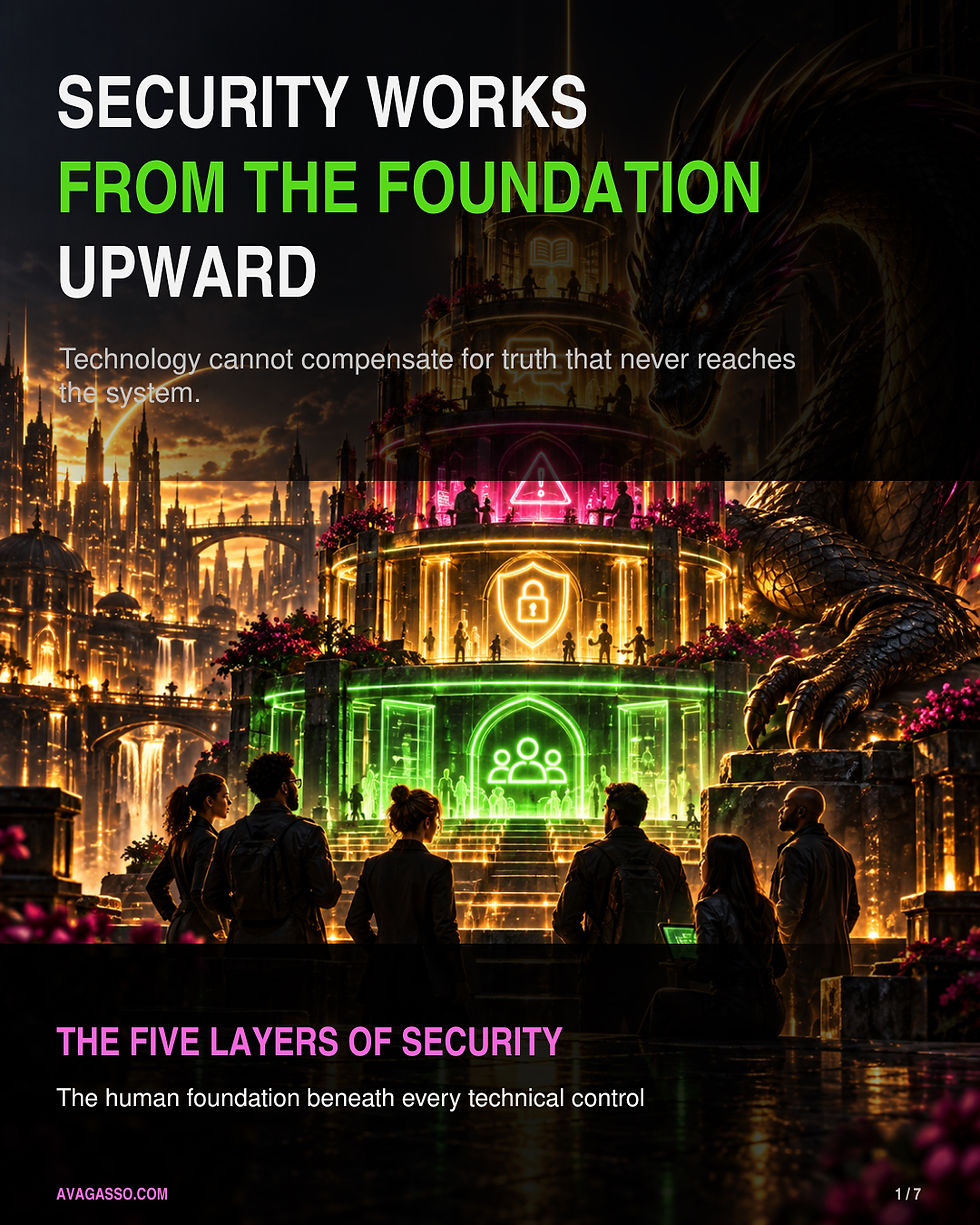
And before your AI approves its own answer, someone still needs to stand beside the dragon, look beneath the glowing surface, and ask:
What are we all agreeing not to see?
This is part of why The Leadership Leap & Landing go beneath visible leadership behavior. Independent challenge cannot thrive through a new meeting technique alone. Leaders must learn to recognize the dragons protecting their own certainty, regulate the discomfort of being questioned, separate disagreement from rejection, and build enough trust that another perspective does not feel like a threat. The book & program develop the self-awareness, intellectual humility, and relational courage leaders need to remain human in systems that can now manufacture convincing answers faster than we can examine their meaning.
Explore more at avagasso.com.


Comments